Artist
Artist Statement
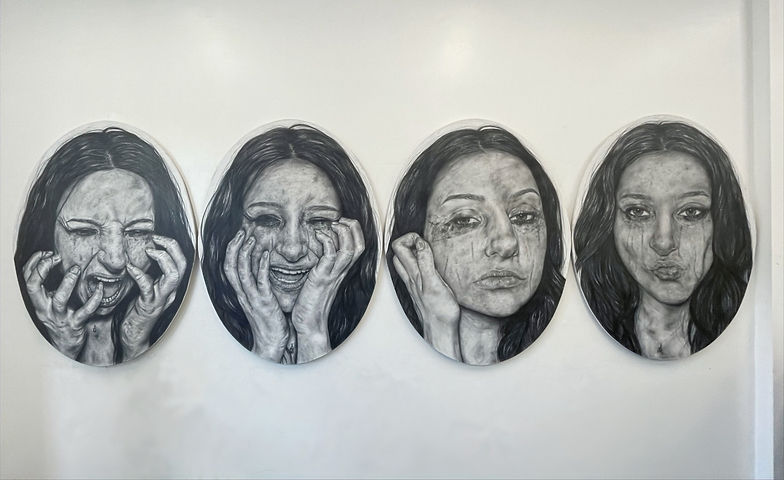
From the recognisable figure to the classic oval shape, it may be perceived that Kate Oakey is a portrait artist however her work values narrative, texture and emotion above photorealism and classic portraiture. Working from her own photography and using graphite on canvas, she creates large scale drawings of the female subject. The canvas produces a natural grain to the graphite adding a gritty element to her work. Photorealist artists like Chuck Close have influenced Oakey. However, instead rendering the drawings completely seamless and smooth like Close does, she explores the texture and imperfections of the graphite. Making small and deliberate marks using pencil or posca pen to pull the viewers in and engage with the quality of the drawing. The drawing process itself takes a considerable amount of time with the artist becoming even more familiar with the reference photo to craft the complexity of the figure and her emotions.
At the core of her work lies a commitment to exploring contemporary feminist issues, narrating what it’s like to be a young woman in the current society. She examines women’s relationships with themselves as well as women’s relationships with men; driven from personal experiences of the artist and the close women in her life who she looks up to. Whilst Oakey intentionally uses conceptual ideas and narrative to fuel the work, she also recalls Roland Barthes’ theory of ‘Death of the Author’ and welcomes viewers to consider their own interpretation of the art. Historically women in art are portrayed as ‘delicate’ and ‘beautiful’ but Oakey asserts her aim to not make something typically ‘pretty’ but instead something gritty, heartfelt and powerful. Oakey has found that using her subject, expands the connection to her audience, including none art audiences, as the work still resonates on a personal level.
Directing the photoshoots to obtain reference images to draw from is a vital component of Oakey’s process. Working closely with the same model, one of her closest friends, they collaborate in portraying the narrative of the piece. Using someone close to her has created an extended form of self-portraiture; as they know each other intimately, the model can reflect emotions and situations that the artist has experienced. Many artists draw upon their personal experiences such as Tracey Emin, Carrie Mae Weems and Janice Guy who have been a consistent inspiration for Oakey.